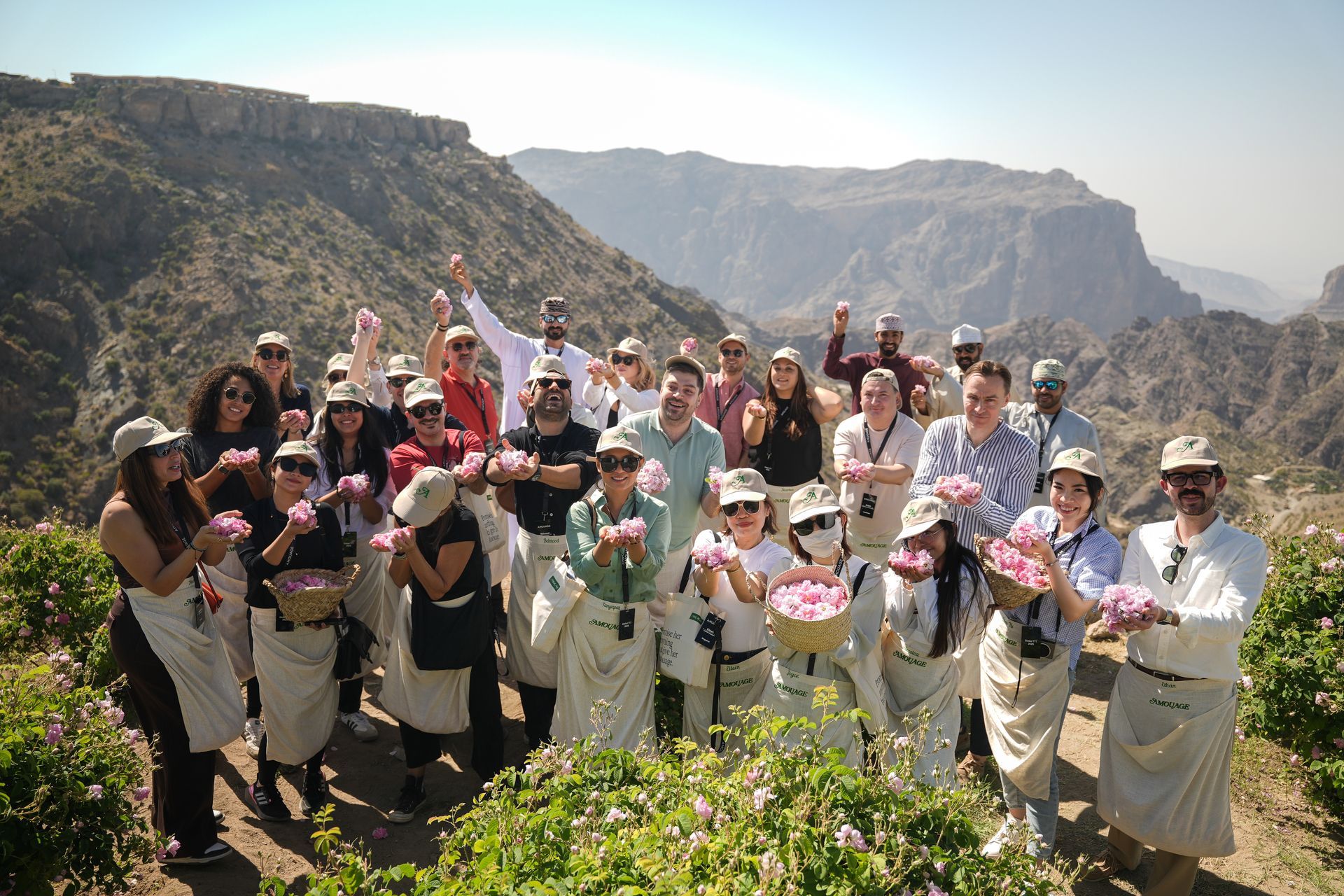
Every April, the terraced slopes of Jabal Akhdar turn pink. This season, we took the Amouage team on a full day with the Omani rose: picking it on the mountain farms, watching it distilled the traditional way at Bait Al Sarh, and seeing rose oil made in a modern distillery. WikiTours organized the whole journey, from pickup in Muscat to the drive home.
The rose was no random choice. Amouage is the Omani perfume house founded in 1983, its name taken from the Arabic word for "waves". Rose and frankincense are the two ingredients the house says represent Oman in its fragrances, so this trip was a return to one of the roots of its story.
From Muscat to the top of the mountain
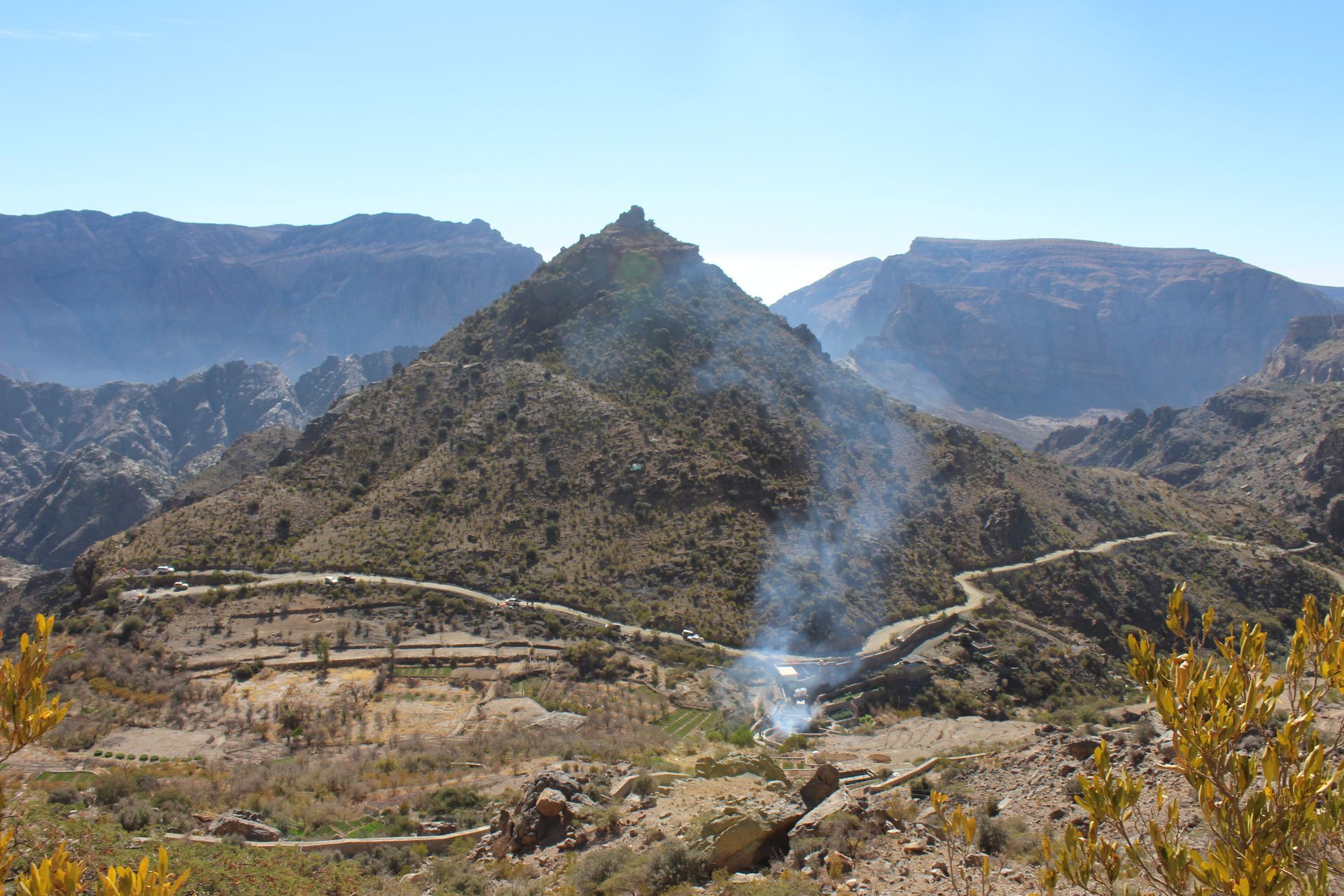
We left Muscat early in the morning and headed inland. Jabal Akhdar is about two hours' drive away, and the climb begins at Birkat Al Mouz, between Nizwa and Izki.
The road up is paved but very steep, and only 4x4 vehicles are allowed past the police checkpoint. With every bend the air cools and the view opens up, until you reach villages sitting more than 2,000 meters above sea level.
Picking roses on the terraces
Our first stop was the rose farms carved into the mountainside. This is home to the Damask rose, known locally as ward muhammadi , a 30-petal variety that has developed a scent unique to Jabal Akhdar over centuries.
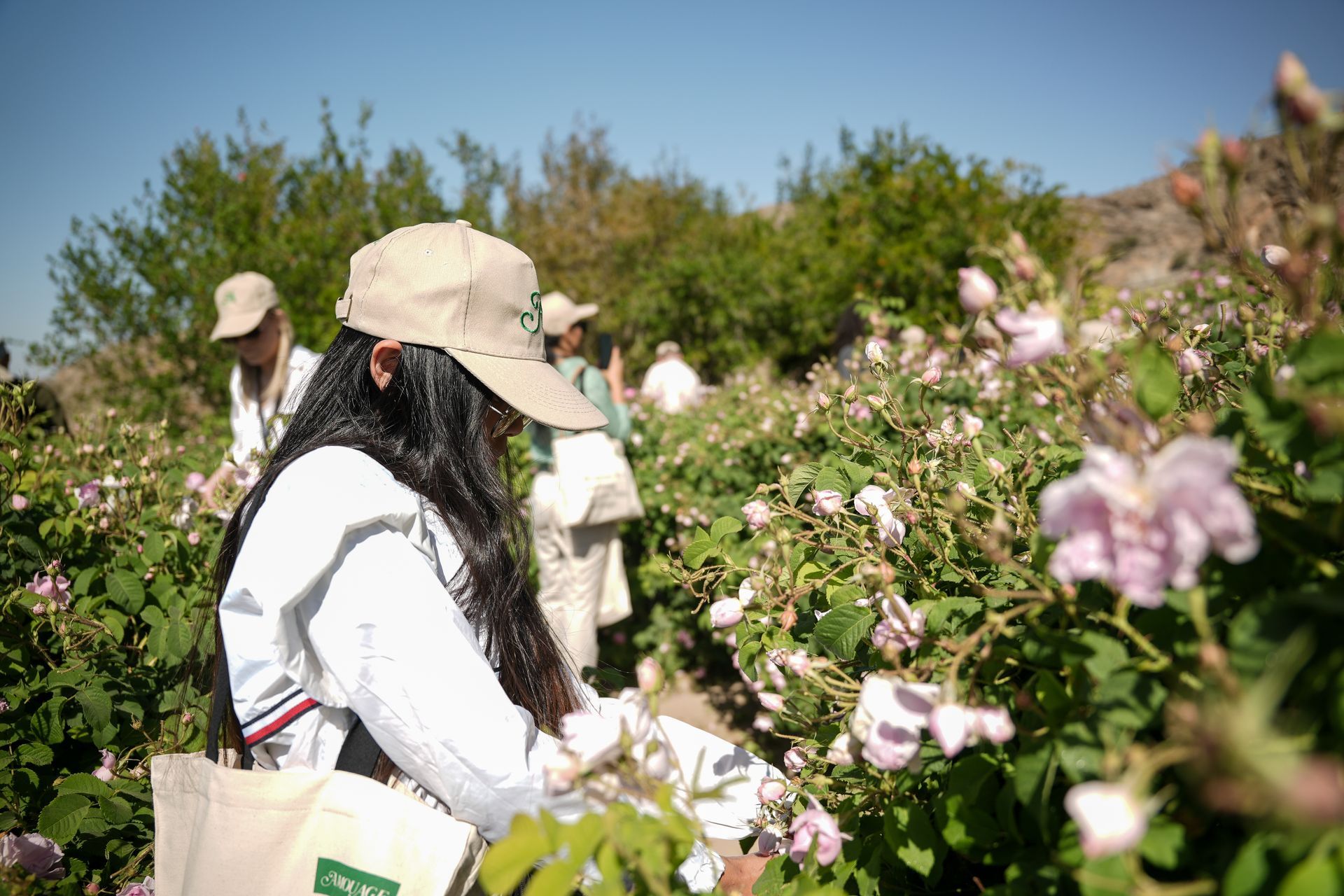
The roses are picked by hand early in the morning, before the sun gets strong and the petals lose some of their fragrance. Each of us took a basket and started picking, while water from the falaj irrigation channels ran between the terraces.
After the harvest we walked the farm paths between the terraces and pomegranate trees, taking photos with the farmers. They explained how freshly picked roses go straight to distillation so they keep their scent.
Bait Al Sarh: distilling roses the way it was done for centuries
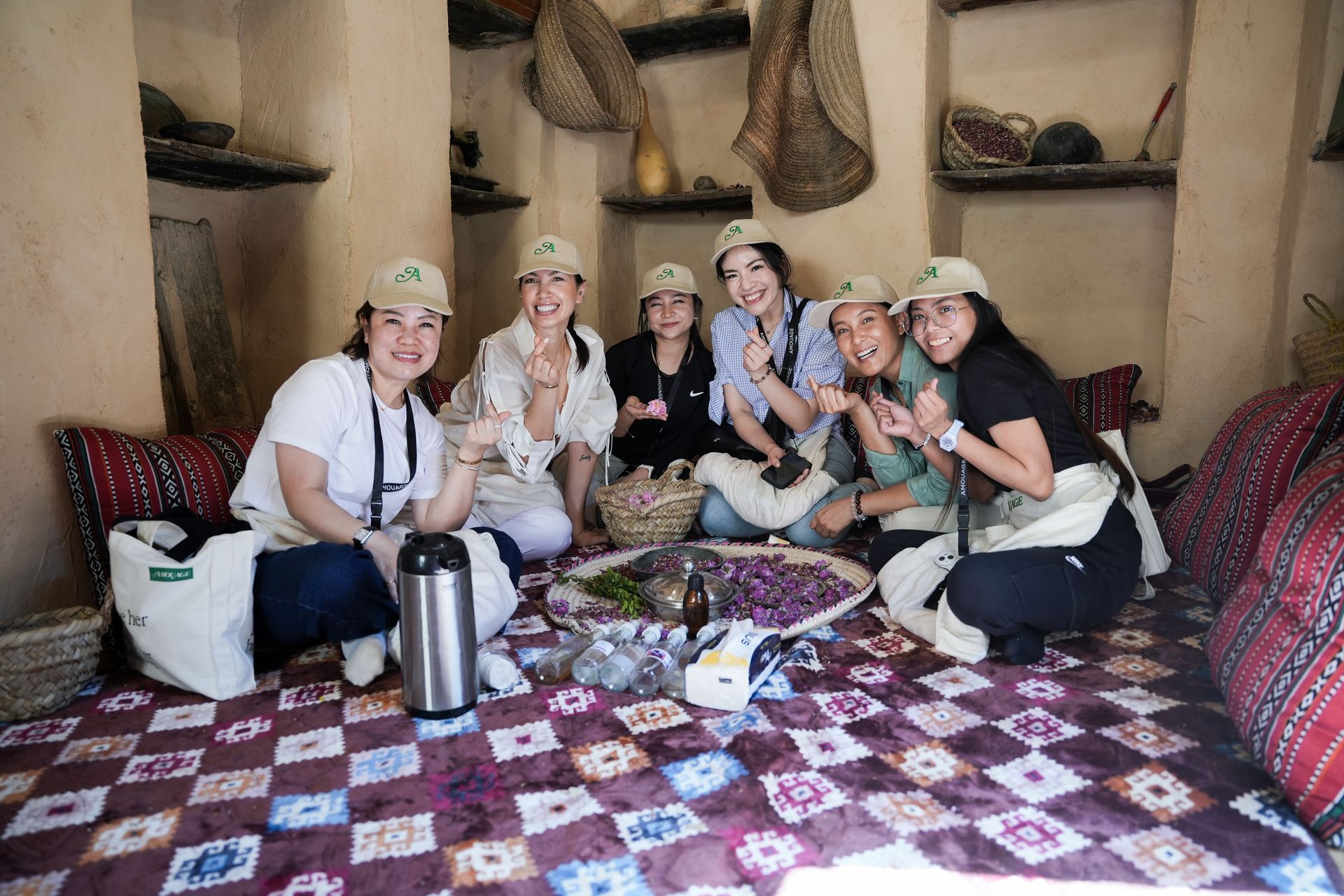
Next we moved to Bait Al Sarh in the village of Saiq, an old family home turned into a living museum of rosewater distillation. The family has passed this craft down through generations and now opens its doors so visitors can see every step up close.
On a guided tour, we learned the traditional method step by step:
- Freshly picked roses are covered with a damp cloth for a few hours.
- The petals go into clay pots set over a mud oven, with a small copper bowl placed inside to catch the water.
- The pot is sealed with wet cloth and a fire of fig wood is lit underneath.
- The steam condenses and rosewater collects in the copper bowl. One batch takes several hours.
About 2 kg of roses produce only around 300 ml of rosewater.
That slow, wood-fired process gives Jabal Akhdar rosewater its brownish color and light smoky aroma, unlike any other rosewater.
We ended the visit by tasting the house's products, from fresh rosewater to the treats made with it, and noticing the difference between fresh and aged rosewater.
From clay pots to modern stills: the rose oil factory
After tradition came modern technology. We visited a modern rose distillery in Jabal Akhdar, where metal stills replace the clay pots.
Here we saw the most precious product of all: rose oil, known locally as dehn al ward , the concentrated essential oil that rises to the top of the rosewater after distillation. The quantities are tiny compared to the mass of petals, which is why rose oil is one of the most valuable raw materials in perfumery.
Seeing both places on the same day was the highlight of the trip: the same rose and the same mountain, made two ways separated by centuries.
Coffee and lunch on the mountain
The day included an Omani coffee break with views over the valleys, a chance to catch our breath between stops. During rose season, some local brands even serve rose-flavored Arabic coffee and rose-filled sweets.
We then sat down together for lunch, closing a long day of walking and discovery before the drive back to Muscat.
Why roses matter to Amouage
For Amouage, the rose is more than an ingredient; it is part of the Omani house's identity. In recent years, Amouage has partnered with IFF to build a new supply chain for perfume-grade Jabal Akhdar roses.
According to the announcement, the new facilities are expected to be running for the 2027 harvest, with the first batches reserved for Amouage fragrances. The long-term goal is to make Jabal Akhdar a global benchmark for perfume rose cultivation.
Tips for visiting during rose season
- When: The season usually runs from late March to late April, with April as peak bloom.
- What time: Arrive in the morning to see the harvest before the day heats up.
- Getting there: The climb requires a 4x4, or a guided trip like our Oman Damask Rose Tour.
- What to wear: The mountain is much cooler than Muscat. Bring an extra layer and comfortable shoes for the terraces.
- Souvenirs: Buy rosewater and rose oil directly from local distillers.